
I’ll start with a brief disclaimer: this is not another generic “AI will change everything” predictions piece. This blog looks beyond the hype to the next stage of AI adoption where enterprise systems mature, human and AI intelligence roles are intentionally redefined, and Generative AI (GenAI) becomes a practical force reshaping real business processes, not theoretical possibilities. Read on for a grounded view of where AI in manufacturing is genuinely heading in 2026.
As global manufacturers prepare for 2026, one reality is becoming unmistakably clear: AI is no longer a future ambition but rather the engine powering the next era of productivity, resilience, and sustainability.
Driven by this potential, the convergence of manufacturing operations, enterprise IT, and advanced AI is accelerating an already unprecedented pace of change. This shift is fundamentally reshaping how factories run, how supply chains respond to disruption, and how engineering teams design and optimize at scale.
Supporting this momentum, a Manufacturing Leadership Council survey found that 78% of manufacturers plan to increase investment in AI technologies over the next two years.
Drawing on this new AI in manufacturing landscape, current adoption patterns, and leading research, the following five predictions highlight where manufacturers will focus next and where competitive advantage will be won in the year ahead.
1. AI-Driven Hyperautomation Will Become the Industry Standard in Manufacturing
By 2026, hyperautomation, the end‑to‑end automation of complex business and shop‑floor processes, will be the new baseline.
Manufacturers are already integrating AI into core enterprise and operational systems such as enterprise resource planning (ERP), manufacturing execution system (MES), and product lifecycle management (PLM) platforms. The next step is continuous, autonomous optimization.
When applied in this way, AI models will enhance every stage of production by:
- Predictively scheduling workflows based on machine health, labor availability, and supply fluctuations
- Performing automated, real‑time quality checks using computer vision
- Dynamically reallocating equipment and labor to maintain throughput during disruptions
- Delivering prescriptive recommendations directly inside operations dashboards
The impact is substantial: early adopters are already achieving a significant reduction in unplanned downtime, higher throughput, and more stable production cycles. In 2026, this level of intelligence will move from differentiator to expectation.
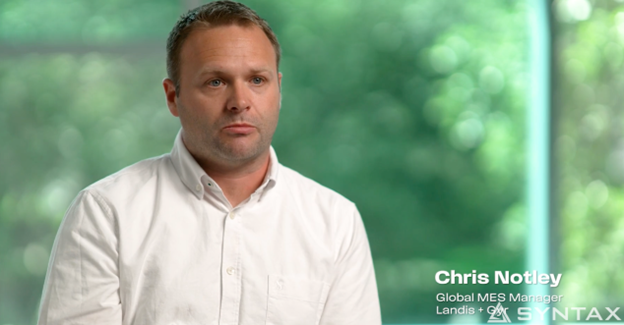
Learn how Landis+Gyr partnered with Syntax to optimize processes on SAP Digital Manufacturing.
2. Digital Twins Will Evolve Into Autonomous Decision Agents
Digital twins have been staples of advanced manufacturing for years, but their capabilities are about to scale dramatically. Historically, digital twins offered virtual replication for simulation and monitoring. In 2026, they will start to function as autonomous decision agents.
In fact, according to industry research, 65% of manufacturing technology leaders plan to use digital twins to optimize operations in the future.
Powered by real‑time IoT data and advanced AI analytics, next‑generation digital twins will:
- Self‑adjust production parameters based on performance deviations
- Trigger predictive maintenance instructions without human intervention
- Run automated simulations to determine the best response to market or supply chain changes
- Communicate directly with ERP and MES systems to apply immediate operational adjustments
The result is a continuously self‑optimizing environment where machines, systems, and software intelligently collaborate, drastically reducing latency between identifying a problem and acting on it.
3. AI-Enhanced Supply Chain Resilience Will Take Center Stage
The last few years highlighted how vulnerable global supply chains can be. Volatility isn’t going away in 2026, but the good news is AI is becoming a powerful tool to navigate it.
AI‑powered supply chain control towers will offer true end‑to‑end visibility from suppliers to the shop floor to customers. Manufacturers will rely on AI to:
- Forecast supplier risks long before they materialize
- Optimize inventory planning to balance cost and service levels
- Identify disruptions and respond before operations are affected
- Simulate alternative sourcing or routing scenarios in seconds
Organizations embracing these capabilities can expect to reduce stockouts, emergency expediting, and overproduction. More importantly, they will gain the agility needed to compete in volatile markets where demand patterns can shift overnight.

4. Humans-in-the-Loop AI in Manufacturing Will Redefine Workforce Productivity
In 2026, AI in manufacturing will not replace workers but will empower them. Engineers, technicians, and operators will increasingly rely on AI co‑pilot tools integrated across engineering, maintenance, quality, and safety workflows.
AI‑enabled workforce augmentation in manufacturing will include:
- Real‑time defect detection using computer vision, giving operators instant alerts
- Safety‑sensitive decision support, helping workers evaluate risks before acting
- Maintenance guidance powered by natural‑language AI assistants
- Augmented reality (AR)/virtual reality (VR) immersive training environments that simulate complex scenarios
- Wearable smart devices delivering contextual insights directly to the shop floor
By keeping “humans in the loop,” organizations maintain oversight, ethical control, safety, and domain expertise while dramatically increasing efficiency.
The workforce of the future will be hybrid: skilled people supported continuously by intelligent systems.
5. AI-Powered Sustainability Will Become a Regulatory Imperative in Manufacturing
Sustainability isn’t just a corporate value anymore; it’s a global compliance requirement.
In 2026, AI in manufacturing will play a pivotal role in meeting environmental, social, and governance (ESG) expectations and achieving measurable environmental improvements.
Manufacturers will embed ESG analytics directly into ERP and MES dashboards, enabling AI to:
- Monitor and reduce energy consumption across machines and facilities
- Track and forecast carbon emissions in real time
- Optimize material usage to minimize scrap and waste
- Suggest process changes that reduce environmental impact while improving efficiency
- Align operations with tightening global regulatory requirements
With global regulators tightening reporting and disclosure standards, AI‑driven ESG intelligence will become essential not only for compliance, but also for customer trust and competitive positioning.
Strategic Outlook for 2026: The Rise of the Unified Intelligent Ecosystem
The landscape is clear: isolated AI use cases will no longer be enough. Manufacturers that thrive in 2026 will unify AI prediction models, hyperautomation, supply chain intelligence, and sustainability analytics into one cloud‑native IT ecosystem.
This integrated approach delivers:
- Agility to rapidly respond to market changes
- Lower costs through automation and predictive optimization
- A more empowered, safer, and better‑trained workforce
- True sustainability leadership backed by real operational data
Organizations that embrace this AI-unified model will lead their manufacturing industries, not just in efficiency, but in innovation, resilience, and environmental responsibility.
How Syntax Can Support Success
As manufacturers navigate the accelerating convergence of AI, IT, and operational technology, having the right strategic partner is essential. Syntax brings decades of hands-on expertise helping industrial organizations transform every layer of their digital ecosystem, from modernizing ERP and MES platforms, to migrating mission‑critical workloads to the cloud, to operationalizing innovation at scale.

Our teams help manufacturers establish a secure, governed, and high‑quality data foundation that makes AI adoption faster, safer, and more effective. Whether you’re advancing hyperautomation, deploying digital twins, strengthening supply chain intelligence, or preparing for new sustainability requirements, Syntax ensures your technology investments deliver real, measurable business outcomes.
The next era of AI in manufacturing leadership is already taking shape. Let’s build it together.
Contact us today to start your 2026 transformation journey.
Author

Roman Freidel
Global Leader, Manufacturing Center of Excellence, Syntax
Roman Freidel is a Manufacturing Industry Principal at Syntax with deep expertise in digitalization, SAP cloud solutions, and innovation-driven transformation. With a strong background in presales, project leadership, and SAP S/4HANA Cloud, SAP DMC, and SAP SAC, Roman helps manufacturers modernize operations and achieve measurable business impact.